

Healthcare data engineering
and analytics
Pipelines, mapping and reporting that make clinical data usable for analysis and AI.
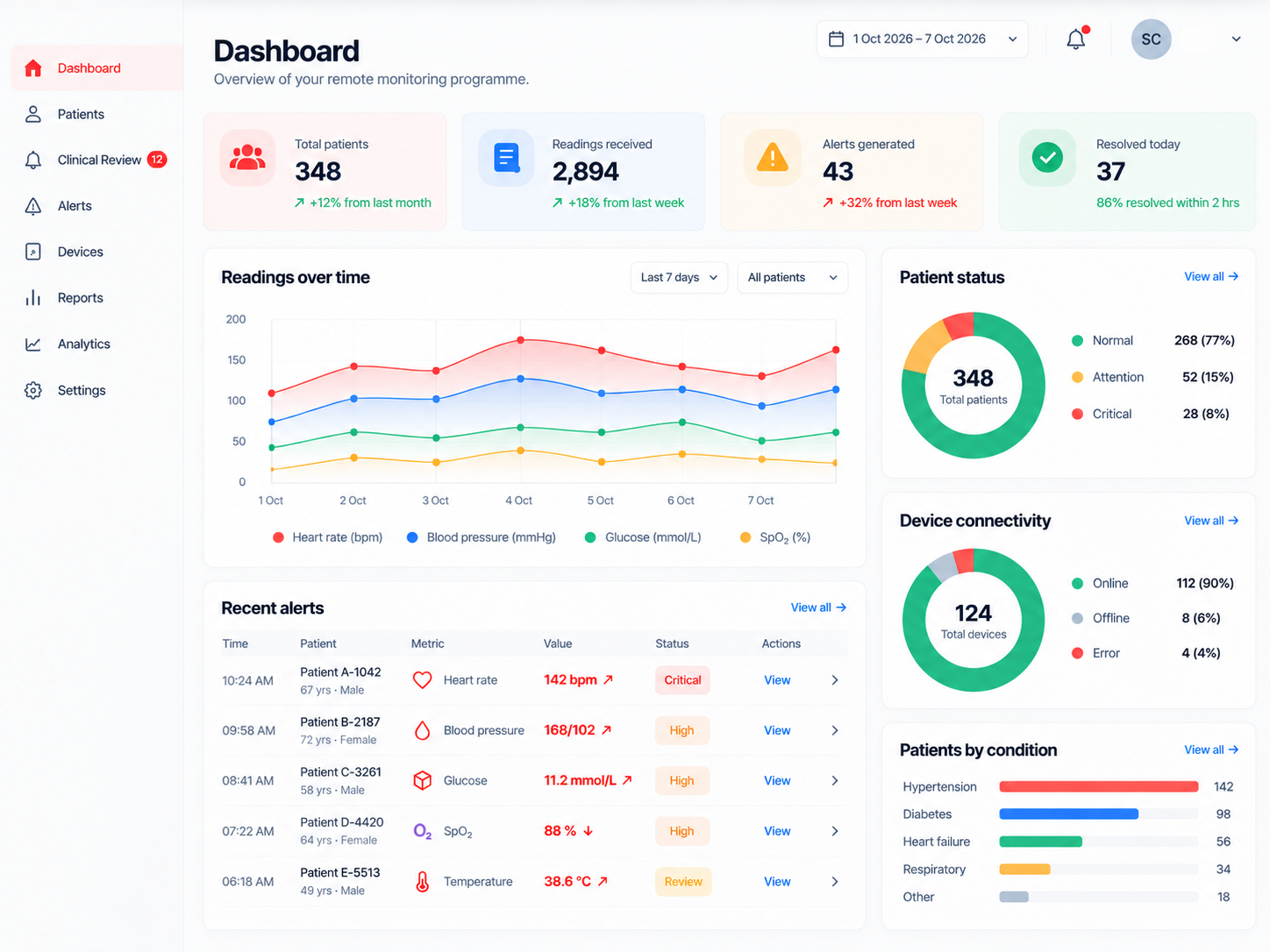
Healthcare data arrives inconsistent and incomplete
The same measurement arrives in three formats, different units and different codes. Records duplicate across systems with no agreed source of truth. Analysis and AI sit on top of that, so mapping and identity resolution come first.
What we build
Data pipelines
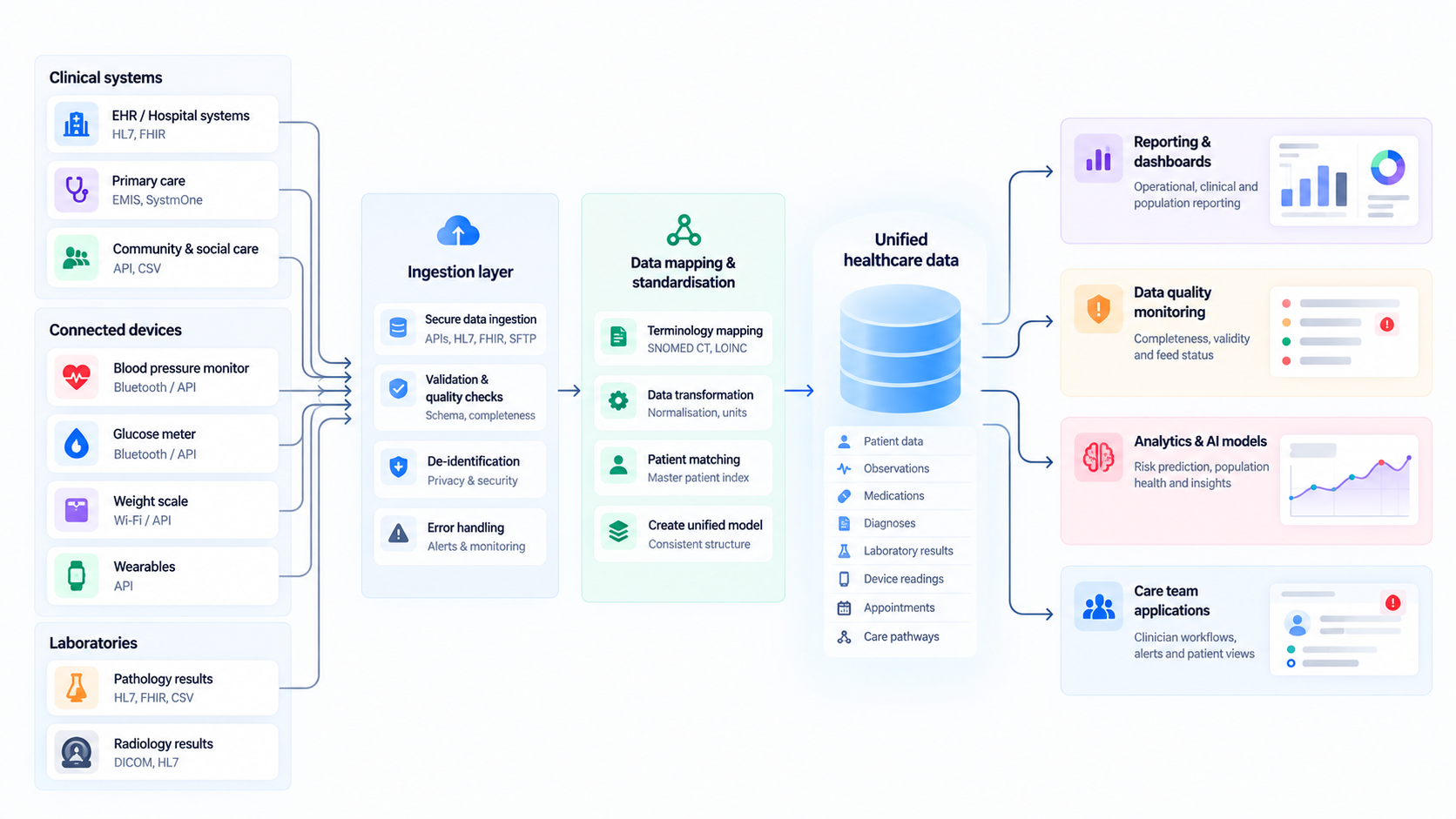
Scheduled and streaming pipelines bringing data in from clinical systems, devices, laboratories, billing and third-party services.
Mapping and normalisation
Converting incoming data into a consistent structure, including units, code systems and clinical terminology.
Patient identity resolution
Matching records that refer to the same person across systems that do not share an identifier.
Data platform
Storage designed for how the data will be used, whether that is operational reporting, longitudinal analysis or feeding a model.
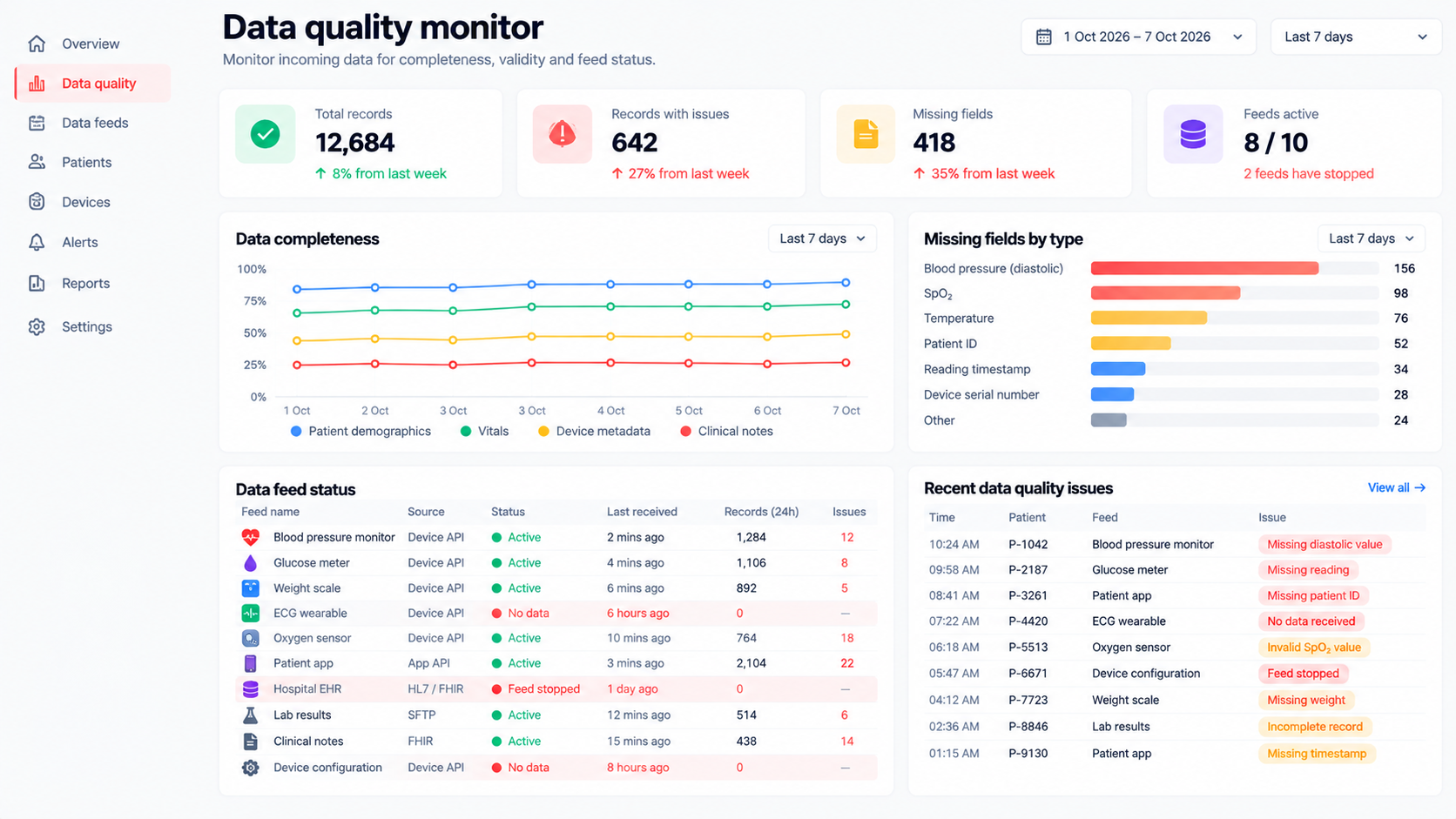
Data quality monitoring
Checks that catch missing fields, unexpected values and feeds that have quietly stopped, before somebody notices in a report.
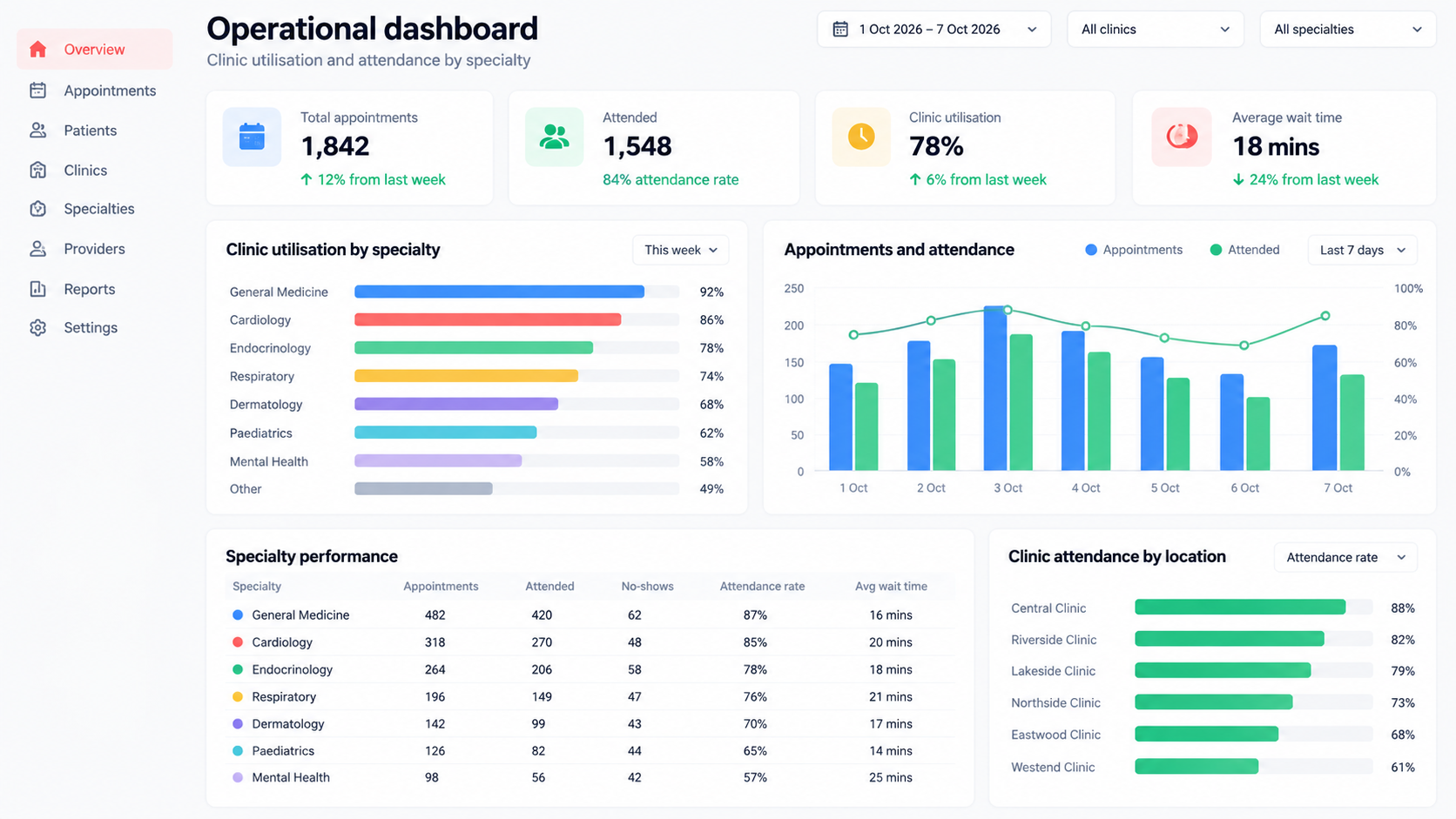
Reporting and dashboards
Views for clinical, operational and executive audiences, each answering the questions that audience actually asks.
Preparing data for AI
Structuring, labelling and governing data so a model can be trained or grounded on it, with provenance retained.
De-identification
Removing or masking identifying information for research, testing or analysis, with the approach documented.
Governance
Access control, lineage, retention rules and audit logging built into the platform rather than added later.
Reporting people actually open
What this looks like in practice
| The question a client had | What was needed |
|---|---|
| Which patients are overdue a review? | Identity resolution across two systems, a rule set agreed with the clinical team, a working list rather than a report |
| Why are clinic slots going unused? | Booking, attendance and cancellation data joined, broken down by clinic, specialty and time of day |
| Can we use our records to train a model? | Data quality assessment, de-identification, provenance tracking, and an honest answer about whether the volume was sufficient |
| Where are device readings disagreeing with clinic measurements? | Device and clinical data brought into one structure with units and timing reconciled |
How the data moves
Technology
| Group | Typical technologies |
|---|---|
| Pipelines | Python, dbt, managed orchestration services |
| Storage | PostgreSQL, cloud data warehouses, object storage, time-series stores |
| Standards and terminology | FHIR, HL7, SNOMED CT, LOINC, ICD-10 |
| Reporting | Power BI, Metabase, Tableau, Looker |
| Governance | Access control, lineage, retention rules, audit logging |
Frequently asked questions
Often not at first. A great deal of useful reporting can run against well-structured operational data. A warehouse earns its place when several sources have to be combined, when history matters, or when reporting is slowing the systems clinicians rely on.
The assessment is usually a few weeks. What follows depends almost entirely on the state of the source data and how many systems are involved. An early data quality assessment is the cheapest way to find out.
Yes. In most cases the problem sits underneath the reporting layer rather than in it, so the tool stays and the data beneath it is rebuilt.
Model work is limited by data quality more often than by model choice. We assess what you hold, what condition it is in and what governance applies before recommending any AI approach, and we will say if the data will not support the idea.
Talk to us about your healthcare data
Tell us what question you cannot currently answer, and which systems hold the data that would answer it.