

Telemedicine software
development
Consultation, intake, portals, messaging and follow-up, designed as one care journey.
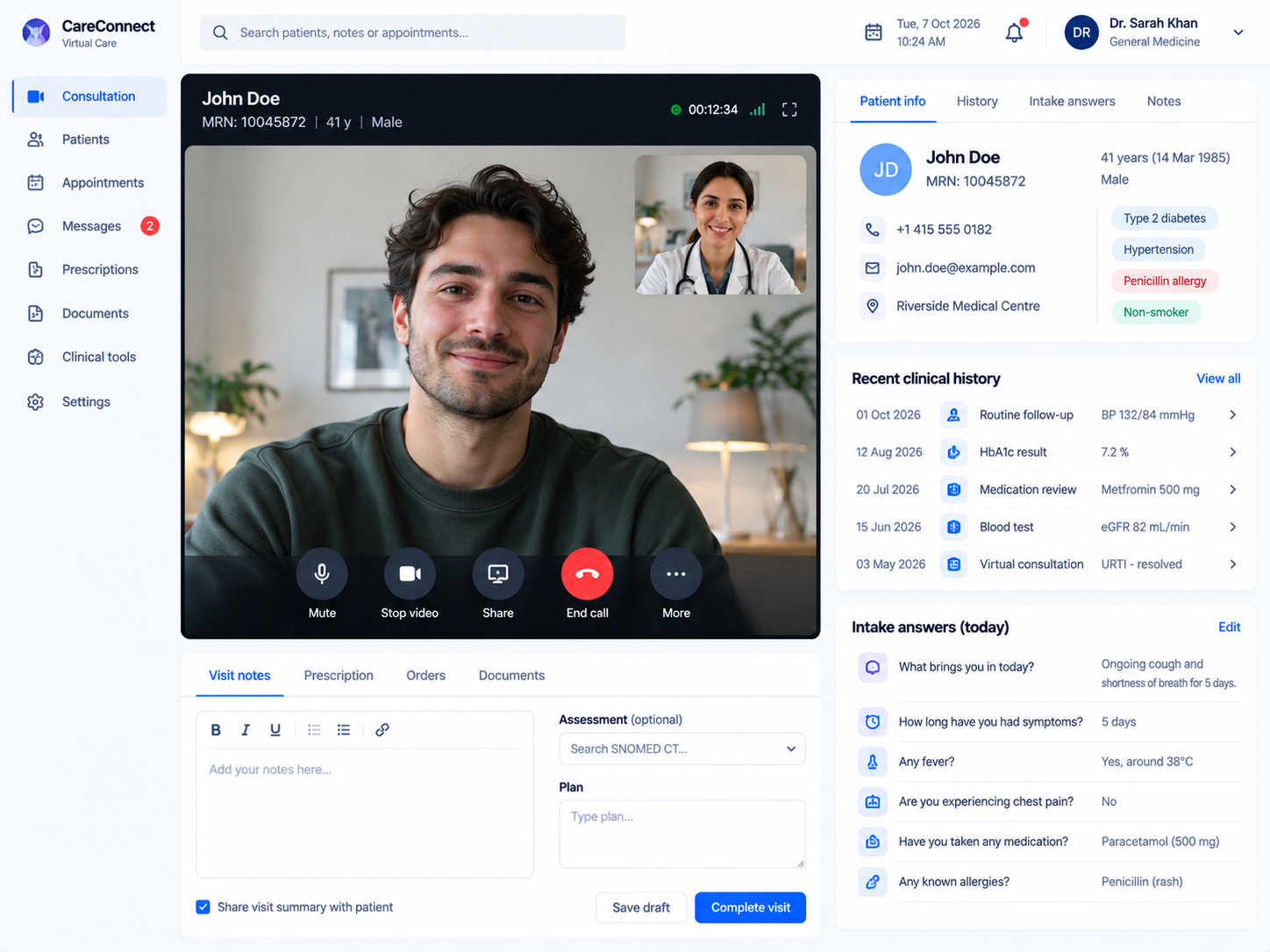
Virtual care is a sequence, not a video call
The consultation rarely fails. Patients drop out at booking, at a long intake form, at a joining link buried in an email, or afterwards when nothing tells them what happens next.
What we build
Booking and scheduling
Availability that reflects real clinical rules, including appointment types, durations, buffers and clinician preferences.
Digital intake
Pre-appointment questionnaires and consent, pre-filled from what is already known, structured so answers reach the clinician usable.
Video consultation
Integration with a suitable video provider, waiting room behaviour, joining that works for patients with limited confidence, and a fallback when the connection fails.
Patient portal
Appointments, results, documents, messages and care plan in one place, with access designed around what the patient should see.
Clinician workspace
The consultation view with history, intake answers, notes and follow-up actions in one screen rather than four tabs.
Secure messaging
Asynchronous messaging between patient and care team, with routing, response expectations and a record in the clinical system.
Reminders and notifications
Appointment reminders, preparation instructions, medication prompts and follow-up, over the channel the patient actually uses.
Follow-up journeys
Structured follow-up after an appointment, including questionnaires, escalation rules and re-booking.
Multi-language support
Interfaces and patient communications in the languages your population uses.
The care journey, screen by screen
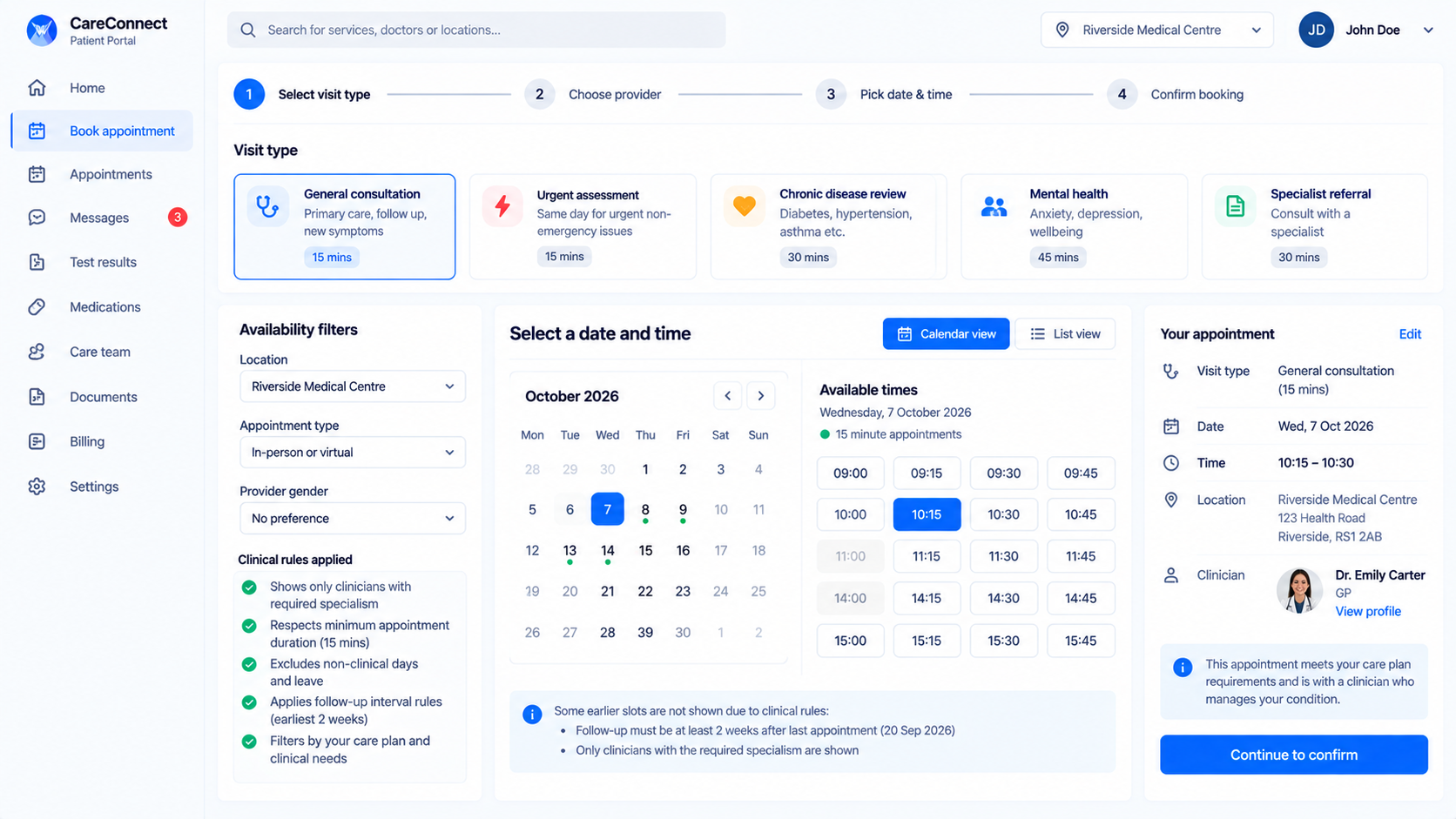
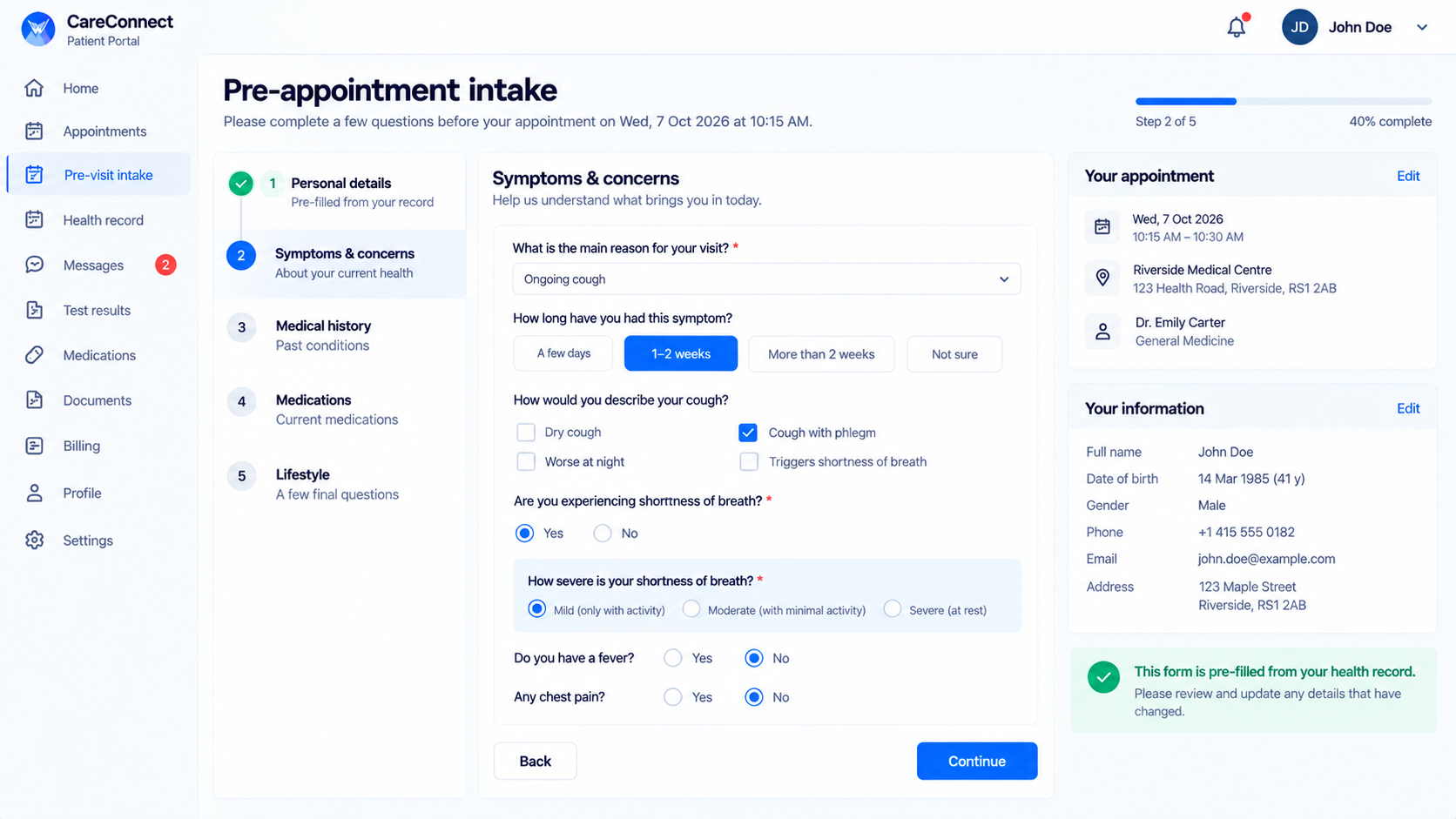
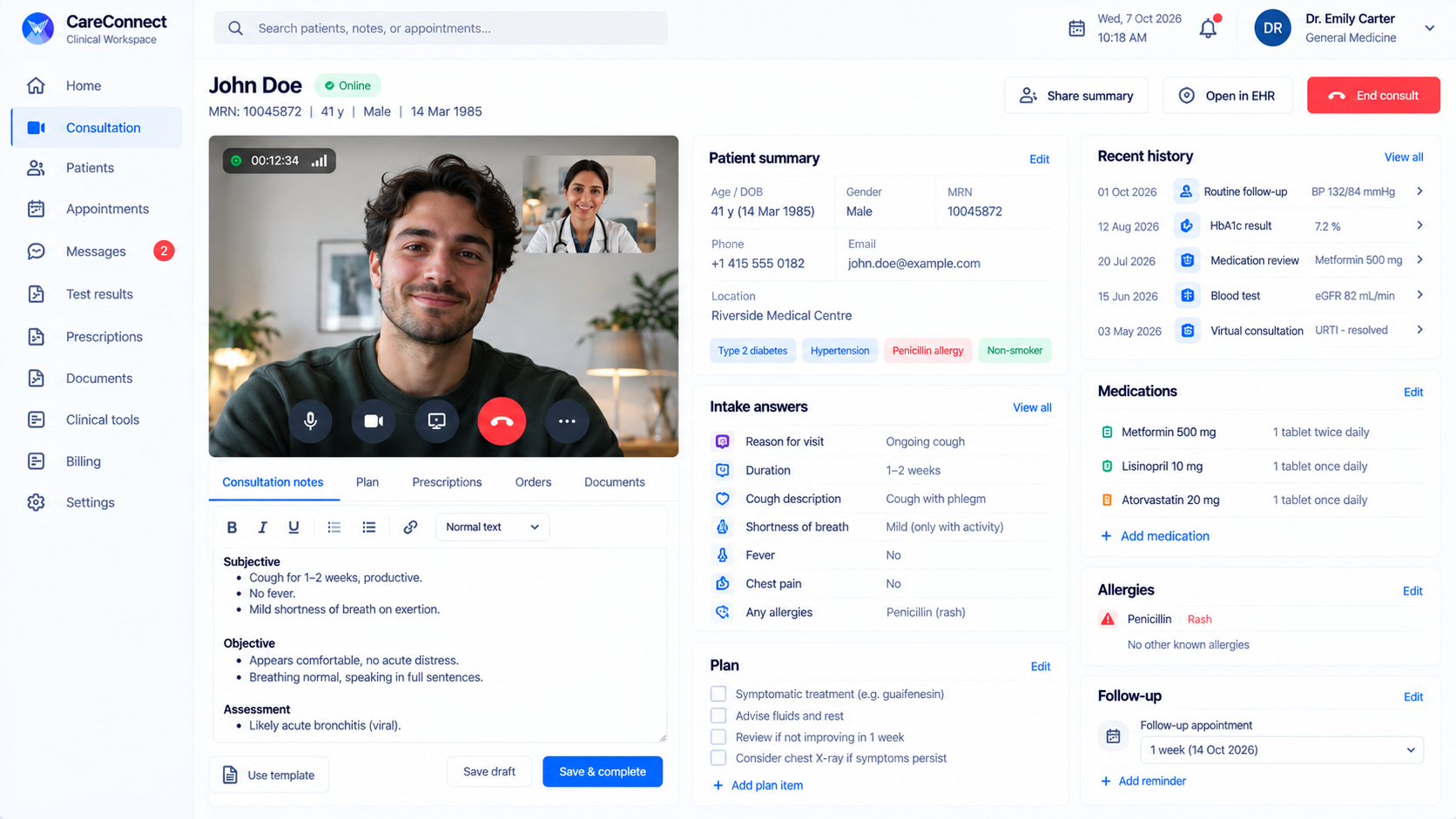
What this looks like in practice
| Journey step | What tends to go wrong | What good looks like |
|---|---|---|
| Booking | Slots offered that the clinic cannot honour | Availability driven by the same rules the clinic uses internally |
| Intake | Long forms asking what the record already holds | Short forms, pre-filled, with conditional questions |
| Joining | Link buried in an email | SMS with a one-tap link, sent at a useful time, with a device check |
| Consultation | Clinician assembling context during the call | Intake answers and history on the same screen as the video |
| After | Patient unsure what happens next | Written summary, clear next step, and a way to ask a question |
Frequently asked questions
Almost never. Established providers handle the hard parts of real-time video, and building it yourself adds cost and risk for no clinical benefit. The work worth doing is everything around the call.
Usually yes, and it generally should. Running a second booking system beside an existing one creates conflicts that patients and reception staff end up resolving by hand.
By keeping the number of steps low, using SMS rather than app downloads where possible, allowing a family member to help without sharing an account, and keeping a telephone route available.
Yes. That usually means audio-only fallback, lighter interfaces, offline-capable intake forms and content that loads progressively. It is a design decision made at the start rather than an optimisation applied later.
Talk to us about a virtual care platform
Bring the service you are running or planning, and the systems it has to sit alongside.