How to Choose the Right IoT Development Company in 2026: A Complete Guide
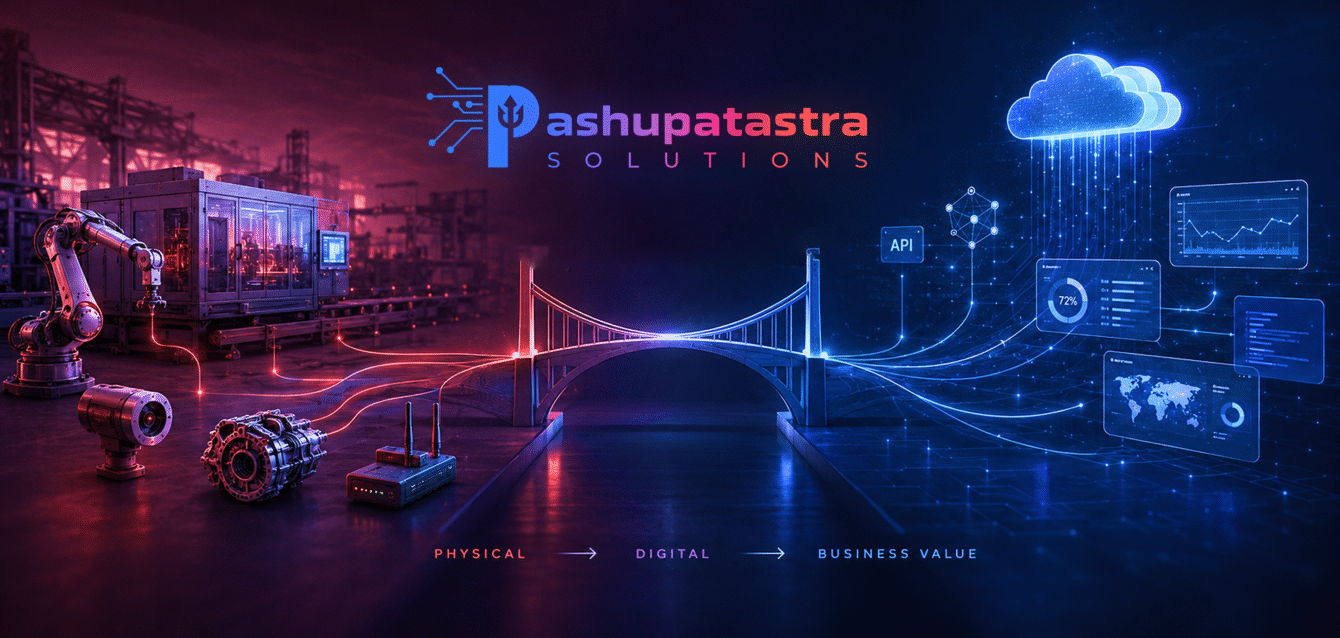
Choosing an IoT development company is not the same as choosing a standard web or mobile development agency. An IoT product connects the physical world with software, data, cloud infrastructure, dashboards, APIs, and business processes. A weakness in any one of these areas can affect the entire solution.
That is why businesses evaluating an IoT development company in 2026 should look beyond portfolios and hourly rates. The right partner should understand your business objective, work with your hardware, build a reliable data architecture, protect connected devices, and support the solution after launch.
This guide explains what businesses should evaluate before choosing an IoT development partner, what questions to ask, how pricing typically works, and how to avoid costly mistakes.
What Should You Look for in an IoT Development Company?
The first mistake businesses make is looking for a company that simply says, “We provide IoT development services.”
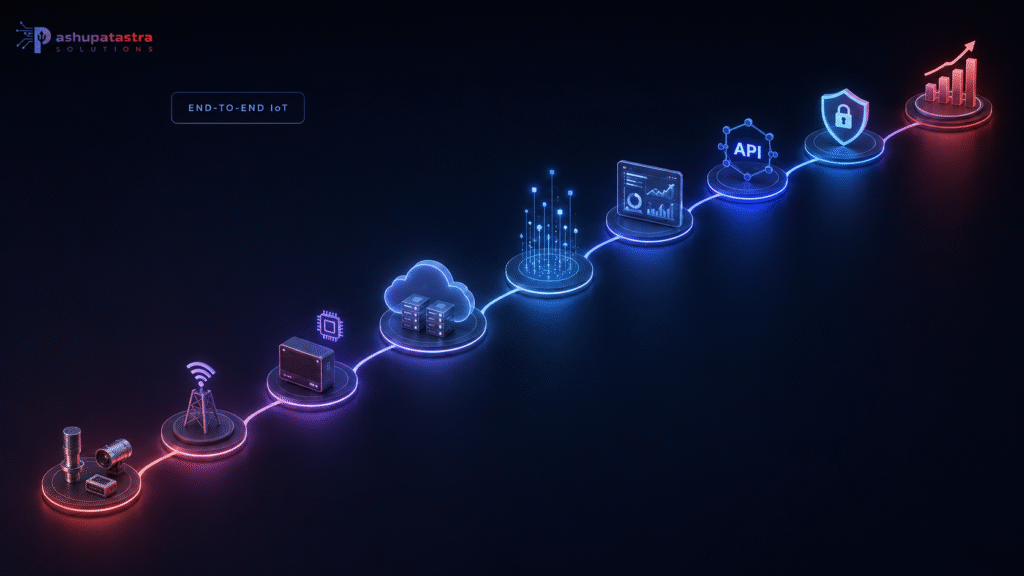
Instead, evaluate whether the company can handle the complete IoT lifecycle—from connected devices to the software your team ultimately uses.
A capable IoT development partner should be able to support areas such as:
- IoT strategy and solution architecture
- Hardware and sensor integration
- Firmware and device communication
- Connectivity and communication protocols
- Edge and gateway processing
- Cloud architecture
- Data storage and processing
- Web and mobile dashboards
- APIs and third-party integrations
- Security
- Testing and deployment
- Monitoring, maintenance, and future scaling
The more connected your solution becomes, the more important this end-to-end capability is.
1. Evaluate the Company’s IoT Development Capabilities
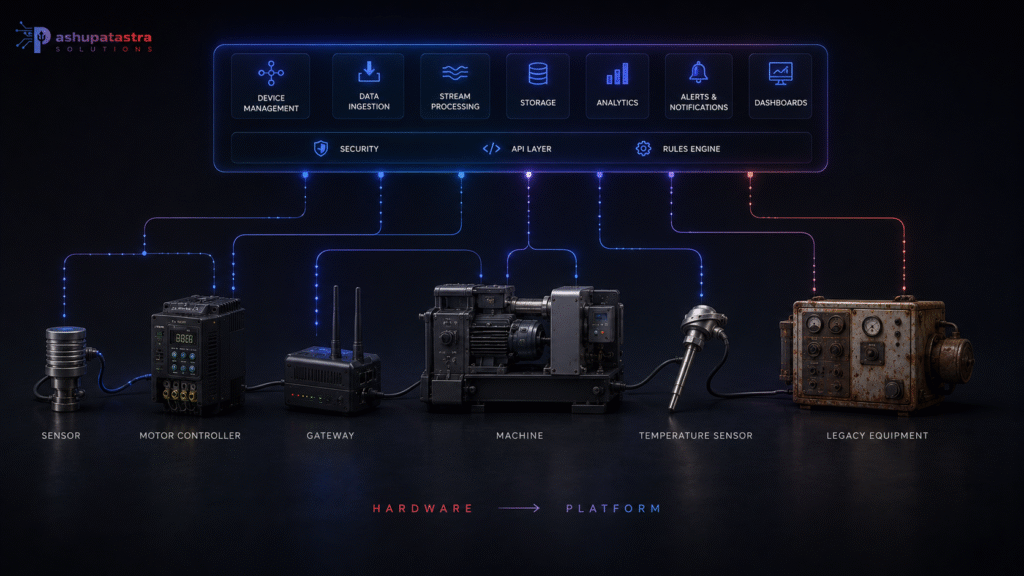
Start with the basics: What can the company actually build?
An experienced IoT development company should be able to explain how it would approach your specific use case rather than presenting a generic technology list.
For example, an industrial monitoring project may require sensor integration, real-time monitoring, alerts, historical reporting, cloud connectivity, and integration with existing business software.
A fleet-tracking solution may need GPS devices, connectivity management, location processing, maps, user permissions, alerts, APIs, and mobile access.
Ask for examples that are similar to your project in terms of:
- Industry
- Device type
- Number of connected devices
- Data volume
- User requirements
- Integration requirements
- Deployment environment
A company that understands your business problem is usually more valuable than one that simply has a long list of technologies.
For businesses looking for broader technical capabilities, you can also explore Pashupatastra’s AI/ML Development services when your IoT project requires analytics, prediction, or intelligent automation.
2. Check Hardware Compatibility
IoT development starts in the physical world.
Before signing a contract, confirm that the development company can work with your existing hardware—or help you select appropriate hardware if your product is still being planned.
Ask:
Can you integrate our sensors, gateways, microcontrollers, devices, and existing equipment?
You should also discuss what happens when hardware changes.
A reliable IoT partner should design the software architecture so that reasonable hardware changes do not require rebuilding the entire platform.
This matters particularly for businesses that are moving from a prototype or pilot to a larger deployment.
3. Understand Connectivity and Protocol Support
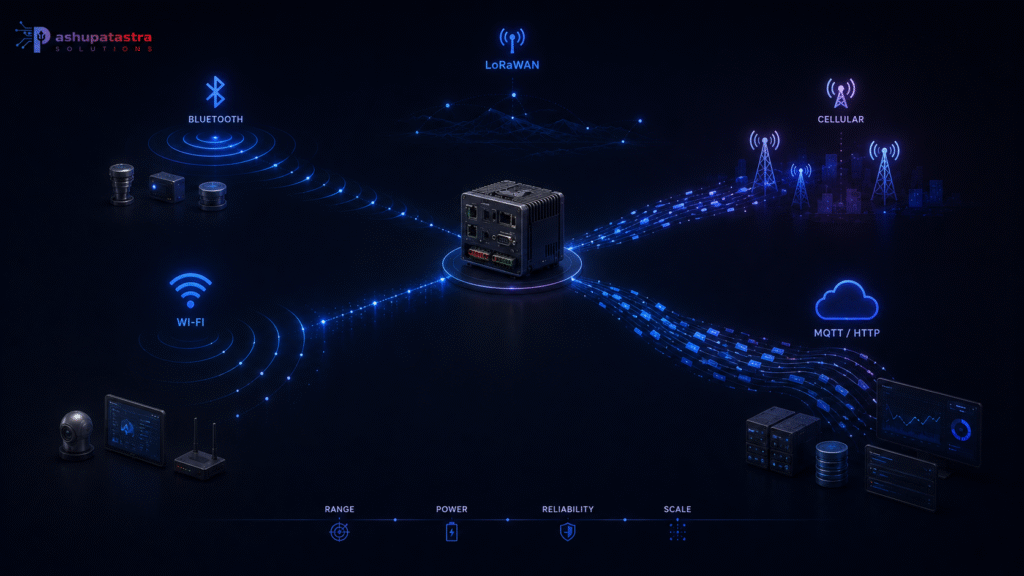
IoT devices need a dependable way to communicate.
The appropriate option depends on factors such as distance, power consumption, environment, device density, and the amount of information being transmitted.
Depending on the project, an IoT company may work with technologies such as Wi-Fi, Bluetooth, cellular connectivity, LoRaWAN, MQTT, HTTP, or other communication methods.
You do not necessarily need to become an expert in these protocols.
Instead, ask your prospective IoT development company:
Why are you recommending this connectivity approach for our project?
A good partner should be able to explain the decision in business terms such as reliability, coverage, cost, battery life, scalability, and maintenance.
4. Ask About Cloud Architecture
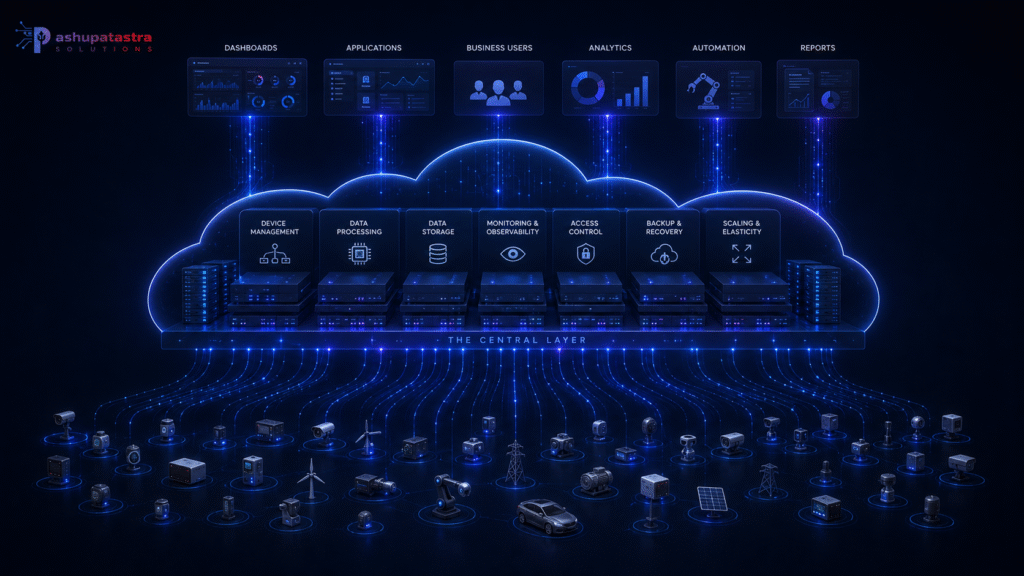
The cloud is often the central layer that connects devices, data, applications, and users.
Your development company should explain where your IoT data will live and how the system will handle increasing amounts of devices and information.
Ask about:
- Cloud platform and hosting approach
- Device management
- Data processing
- Storage
- Backup and recovery
- Monitoring
- Access control
- Scalability
- Disaster recovery
The objective is not simply to choose between one cloud provider and another.
The bigger question is whether the architecture can support your business as your IoT deployment grows.
5. Look Beyond Basic Dashboards
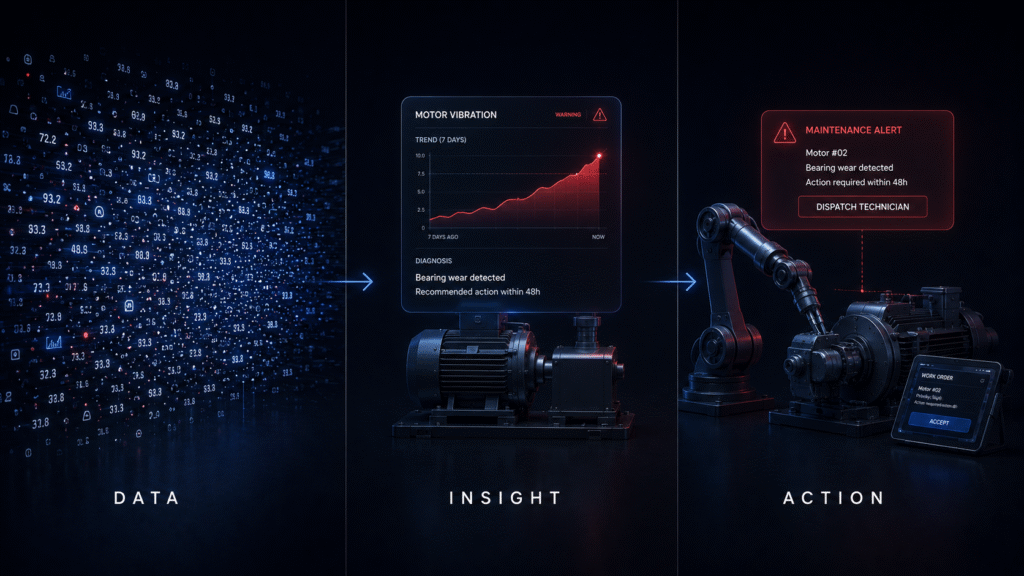
Many IoT projects eventually depend on dashboards because that is where operational teams see what is happening.
A useful IoT dashboard should turn device data into understandable information.
Depending on the business, this could include:
- Real-time status
- Historical trends
- Equipment performance
- Alerts
- Reports
- Device health
- Location information
- User-specific views
Avoid dashboards filled with charts that look impressive but do not help people make decisions.
Ask the company to demonstrate how an actual user would move from data → insight → action.
For businesses that need an intelligent web interface around their IoT solution, Pashupatastra’s AI Web Development services can also complement a connected-system project.
6. Check API and Integration Capabilities
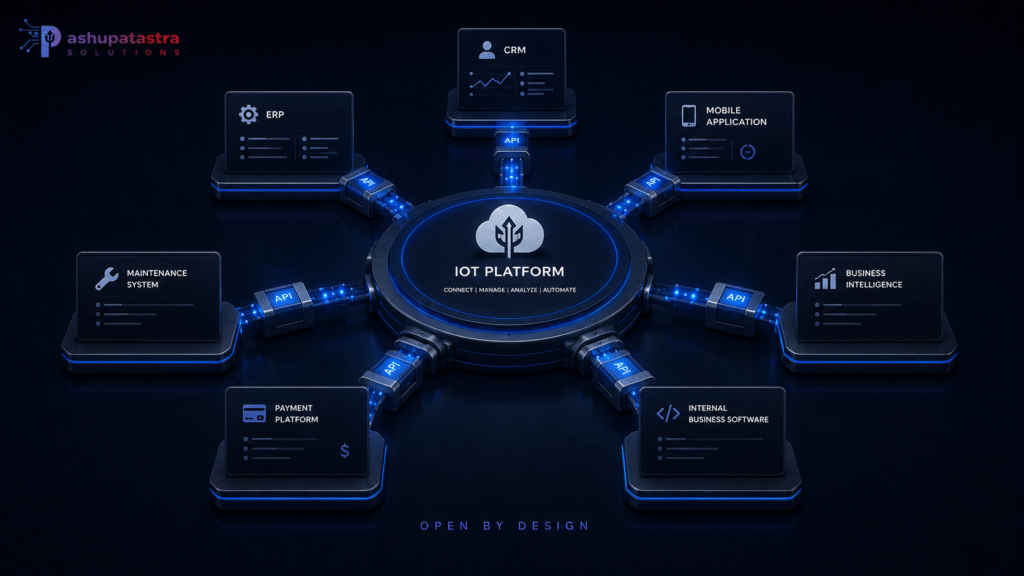
Your IoT platform will rarely operate in isolation.
You may eventually want to connect it to CRM software, ERP platforms, mobile applications, business intelligence tools, payment systems, maintenance software, or internal applications.
That makes APIs important.
Ask:
Can we access our IoT data and system functions through APIs?
Also ask how the company plans to document and maintain those APIs.
A well-designed API strategy can make future integrations much easier and reduce dependence on a single development vendor.
7. Make Security a Selection Criteria
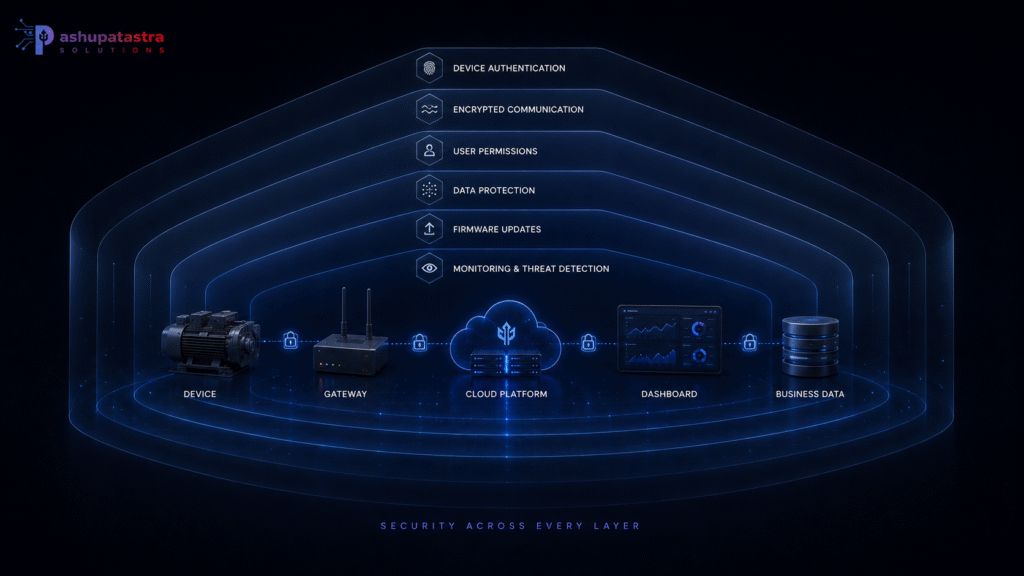
Security should not be treated as an optional feature that gets added near the end.
An IoT ecosystem can involve physical devices, networks, cloud services, applications, user accounts, and business data. That creates multiple areas that need protection.
Ask your potential partner how it addresses:
- Secure device access
- User authentication
- Permissions
- Data protection
- Secure communications
- Software and firmware updates
- Vulnerability testing
- Monitoring and incident response
You do not need a highly technical presentation.
Ask the company to explain the security risks in plain language and show what protections will be included in the project.
8. Confirm Scalability Before You Sign
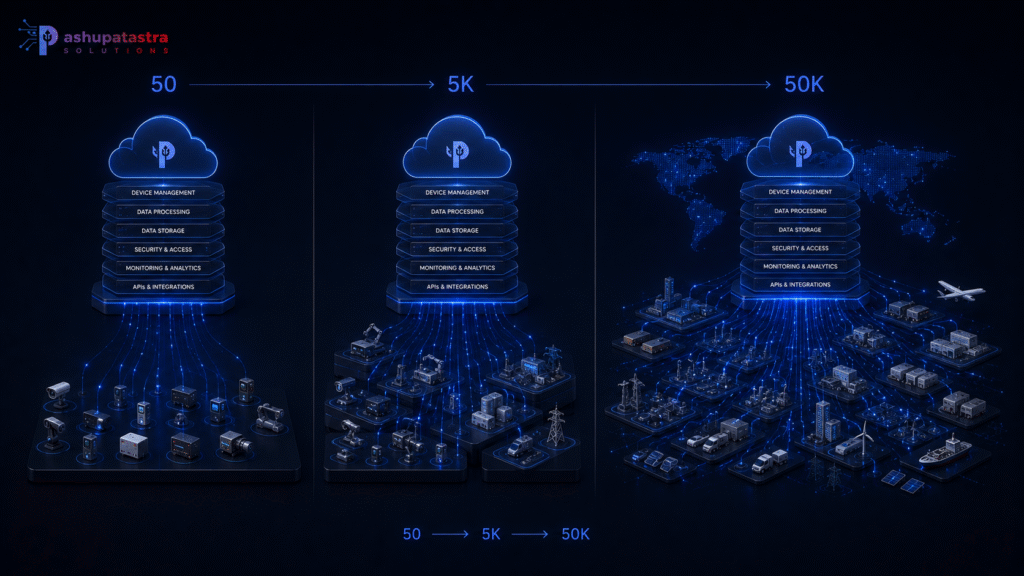
A system that works with 50 devices may behave very differently when the business has 5,000 or 50,000.
Before development begins, discuss your expected growth.
Ask:
What happens if our device count increases significantly over the next two to three years?
Your partner should consider scalability from the beginning rather than attempting to redesign the platform after growth creates performance problems.
This is especially important if your IoT project is intended for multiple locations, customers, factories, vehicles, buildings, or product lines.
9. Clarify Data Ownership
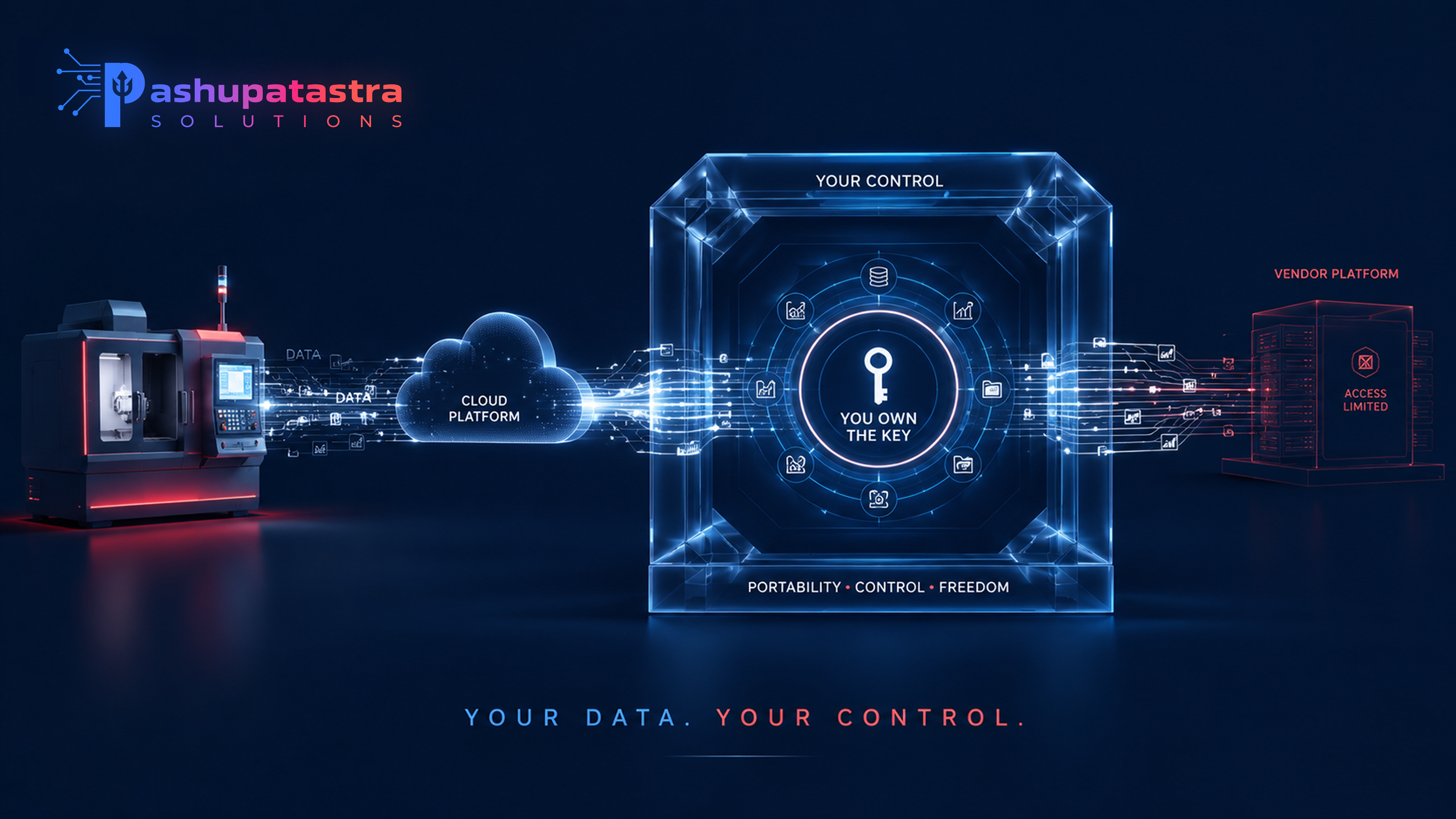
This question is often overlooked:
Who owns the data generated by our devices?
Make sure the contract clearly addresses:
- Ownership of collected data
- Access to raw data
- Data exports
- Database access
- API access
- Intellectual property
- Source code ownership
- Third-party technology dependencies
- What happens if the partnership ends
You should be able to access your business-critical data without being unnecessarily locked into a vendor.
10. Ask About Testing
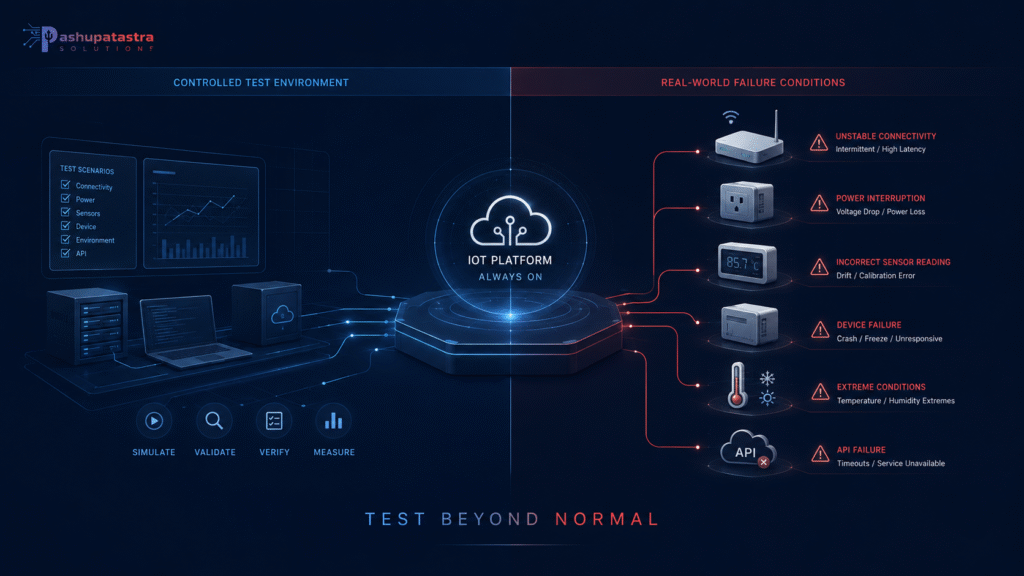
IoT testing is broader than testing a website.
A real connected system can encounter device failures, unreliable connectivity, incorrect sensor readings, power interruptions, software errors, and unexpected operating conditions.
Ask whether the company tests:
- Hardware and software interaction
- Connectivity failures
- Device reliability
- Data accuracy
- Dashboard behavior
- API integrations
- Security
- Performance
- Different device conditions
Ask to see the proposed testing process before development starts.
11. Understand Deployment and Maintenance
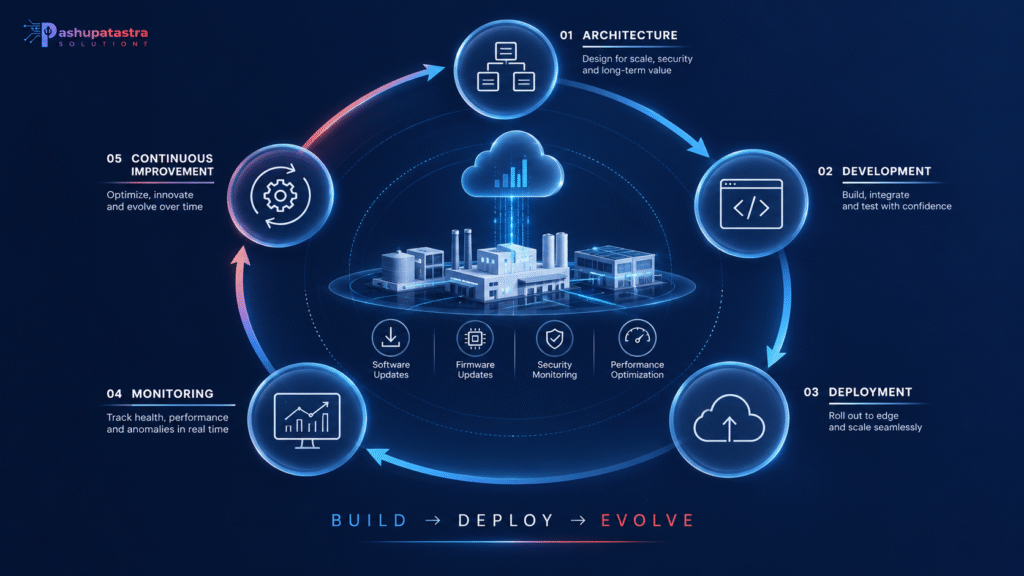
Launching an IoT platform is not the finish line.
Connected systems often require ongoing monitoring, updates, bug fixes, security improvements, device management, and feature development.
Ask your IoT development company:
What happens after launch?
Clarify whether the engagement includes:
- Post-launch support
- Monitoring
- Bug fixes
- Software updates
- Firmware updates
- Cloud maintenance
- Security updates
- Performance optimization
- Technical support
- Future development
A strong long-term support plan can be just as important as the initial build.
Pashupatastra describes its broader approach as covering the development lifecycle from concept through deployment and support, and its portfolio includes an IoT smart-city platform project. (pashupatastras.com)
12. Compare IoT Development Pricing Carefully
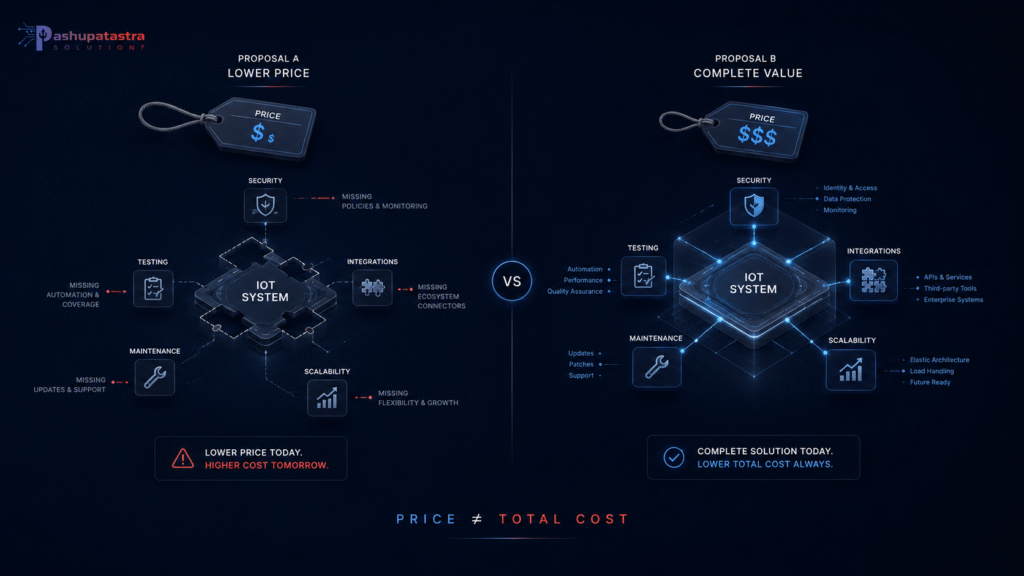
There is no single standard price for IoT development.
The cost depends heavily on the complexity of your solution.
Factors can include:
- Hardware integration
- Number and type of devices
- Connectivity requirements
- Cloud infrastructure
- Dashboard complexity
- Mobile applications
- APIs and integrations
- Security requirements
- Data processing
- Testing
- Deployment
- Ongoing maintenance
Instead of asking only, “How much does IoT development cost?”, ask:
What exactly is included in the quoted price?
Compare proposals based on deliverables, timeline, assumptions, support, technology choices, and ownership—not just the lowest development cost.
A cheaper proposal can become much more expensive if important components are excluded and added later through change requests.
13. Ask These Questions Before Hiring an IoT Development Company
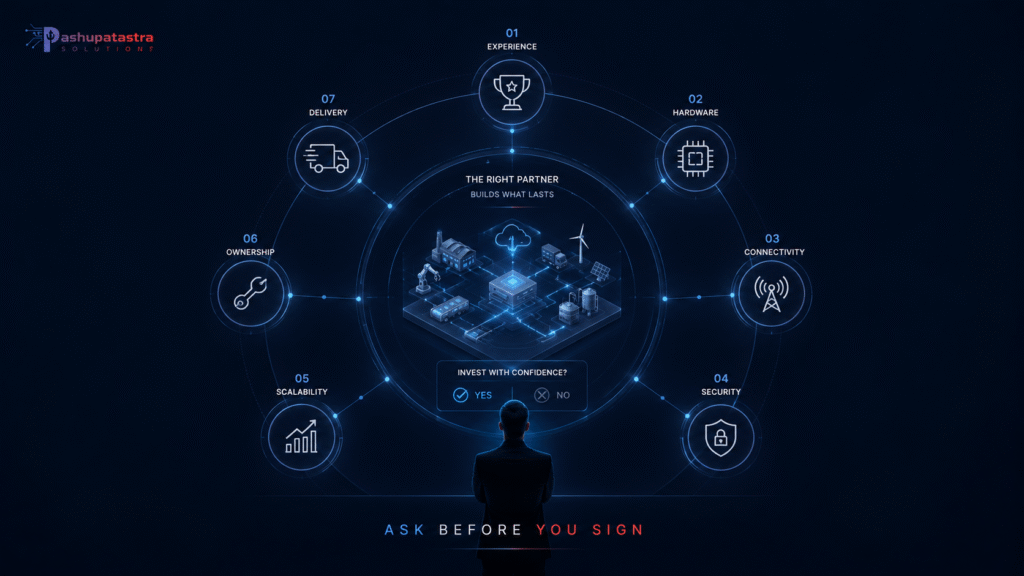
Before making your final decision, ask every shortlisted company the same core questions:
About experience
- Have you built IoT solutions similar to ours?
- Can you show relevant projects or case studies?
- Who will actually work on our project?
About technology
- Can you support our existing hardware?
- Which connectivity technologies do you recommend and why?
- What cloud architecture would you propose?
- Can the platform integrate with our existing software?
About security
- How will devices and data be protected?
- How will access permissions be managed?
- How will security updates be handled after launch?
About scalability
- How will the platform support more devices in the future?
- What happens when data volume increases?
About ownership
- Who owns the source code and data?
- Will we have API and database access?
- What happens if we change development partners?
About delivery
- How do you test IoT systems before deployment?
- What are the project milestones?
- What support is included after launch?
About pricing
- What is included in the estimate?
- Which costs could increase later?
The best development partner should welcome these questions rather than avoid them.
Why Choosing the Right IoT Partner Matters
An IoT project is a long-term technology investment.
The development company you choose can influence everything from architecture and hardware compatibility to security, reliability, scalability, operating costs, and future integrations.
That is why businesses should not choose an IoT development company based only on a website, technology list, or attractive quote.
Look for a partner that can understand the business objective behind the IoT project, explain technology choices clearly, build for future growth, protect your data, and remain available after deployment.
The right partner should help you move from “We want connected devices” to a practical system that creates measurable business value.
Why Consider Pashupatastra for IoT Development?
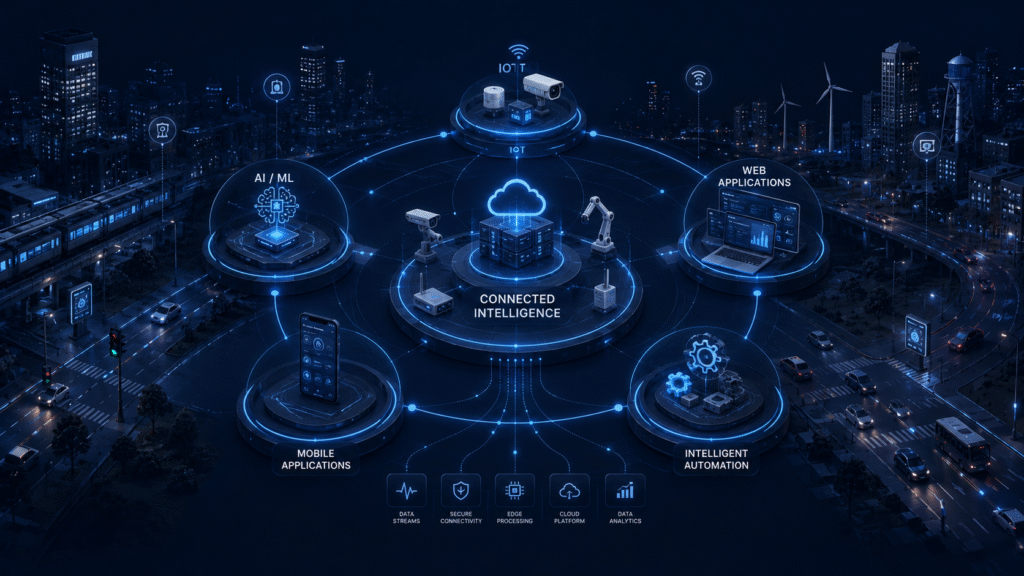
For IoT projects that require additional intelligence or digital products around the connected ecosystem, businesses can also explore Pashupatastra’s AI/ML Development services and AI Web Development services.
The right solution will ultimately depend on your devices, business goals, deployment environment, users, data requirements, and growth plans.
Schedule a Free Consultation
Planning an IoT project but unsure where to start?
Speak with the Pashupatastra team about your business requirements, existing hardware, connectivity needs, software integrations, and development goals.
Schedule a Free Consultation and discuss your IoT project with a development team.
Frequently Asked Questions
How do I choose the best IoT development company for my business?
Look for experience with similar IoT projects, hardware compatibility, connectivity expertise, cloud capabilities, security practices, APIs, scalability, testing, deployment, and long-term maintenance. Do not evaluate companies on price alone.
How much does it cost to hire an IoT development company in 2026?
IoT development costs vary significantly depending on hardware, software, connectivity, cloud infrastructure, dashboards, integrations, security, testing, and deployment requirements. A reliable company should provide a project-specific estimate rather than a generic price.
What questions should I ask an IoT development company before hiring?
Ask about previous projects, hardware compatibility, recommended connectivity, cloud architecture, security, scalability, data ownership, APIs, testing, deployment, maintenance, project milestones, and what is included in the pricing
Can an IoT development company work with existing hardware?
Yes, many IoT projects involve integrating existing sensors, machines, gateways, controllers, or other equipment. Confirm the company’s experience with your specific hardware before development begins.
How long does IoT development take?
The timeline depends on the complexity of the project. A proof of concept can be relatively quick, while a production-ready IoT platform involving hardware, cloud infrastructure, dashboards, integrations, security, and testing can take considerably longer
Should I choose a local or offshore IoT development company?
The most important factors are communication, technical capability, relevant experience, support availability, transparency, and total project cost. Location matters, but it should not be the only deciding factor.
What should an IoT development contract include?
The contract should clearly define scope, deliverables, timelines, pricing, ownership of data and code, third-party costs, testing responsibilities, deployment, support, maintenance, security responsibilities, and what happens when requirements change.
Why is IoT security important when selecting a development partner?
IoT systems connect physical devices, networks, cloud platforms, applications, and business data. Security therefore needs to be considered across the complete ecosystem rather than added as a final feature
Can an IoT platform be expanded after the first version?
Yes. A properly planned IoT architecture can be designed to accommodate additional devices, locations, users, integrations, and data volumes. Scalability should be discussed during architecture planning, not after the system starts experiencing limitations
What is the difference between an IoT development company and a regular software development company?
A regular software company may focus primarily on applications and backend systems. An IoT development company needs to understand the interaction between physical devices, connectivity, software, cloud infrastructure, data, and real-world operating conditions.